TMS for Treatment-Resistant Depression in Hackettstown, NJ
If you have been living with depression that refuses to budge despite trying multiple medications and therapy, you are not out of options. Transcranial magnetic stimulation, commonly called TMS, is an FDA-cleared, noninvasive brain stimulation therapy that uses repeated magnetic pulses to stimulate underactive nerve cells and is a proven treatment for adults with major depressive disorder whose symptoms have not improved after at least two antidepressant medication trials. For patients in Hackettstown, NJ, and nearby Morris, Sussex, and Warren Counties who are looking for an advanced, FDA-approved option after traditional antidepressants have not brought enough relief, TMS offers a scientifically validated alternative at a point when about 30% of people with major depressive disorder still do not respond adequately to standard medication.
Here is what patients in Hackettstown, NJ, and the surrounding area should know about how TMS works, what a typical treatment protocol and visit experience look like, the benefits, risks, and side effects, who is a good candidate, whether insurance may cover treatment, and how TMS can fit into a broader depression care plan that may also include SPRAVATO®, medication management, diagnostic testing, and micronutrient IV therapy.
Key Takeaways
- Transcranial magnetic stimulation tms is an FDA-approved, noninvasive form of depression treatment that uses repeated magnetic pulses to stimulate underactive nerve cells in the brain. It is designed for adults whose major depressive disorder has not improved after at least two antidepressant medication trials.
- At Revitalizing Remedies in Hackettstown, NJ, tms therapy is delivered entirely on an outpatient basis. The procedure does not require anesthesia, involves no downtime, and patients can return to normal activities immediately after each session, including driving themselves home.
- Large clinical studies show that about 50% to 60% of patients with treatment resistant depression experience meaningful symptom relief from repetitive transcranial magnetic stimulation, with approximately 37% of patients achieving full remission.
- TMS carries a different side-effect profile than other depression treatments like antidepressants or electroconvulsive therapy. Most side effects are mild and temporary, primarily headaches and scalp discomfort.
- Adults in Hackettstown and nearby Morris, Sussex, and Warren County communities can contact Revitalizing Remedies to find out whether TMS, SPRAVATO® (esketamine), or a combined treatment approach is their best next step.
Understanding Treatment-Resistant (Resistant) Depression
Treatment resistant depression, sometimes shortened to TRD or simply called resistant depression, is major depressive disorder that has not improved after at least two adequate trials of antidepressant medication from different drug classes, combined with appropriate talk therapy. It is not a reflection of willpower or effort; it is a clinical reality rooted in brain biology.
For the people living with it, stubborn depression means persistent low mood, crushing fatigue, difficulty concentrating at work or school, and a sense that nothing will ever change, despite months or years of trying different pills. About 30% of people with major depressive disorder do not respond to first line treatments, and research shows that patients with TRD spend an average of 571 days in depressive episodes, cycling through medications with progressively diminishing returns.
Why does depression treatment fail for so many? Common reasons include co-occurring mental health conditions that complicate the picture, biological differences in brain circuitry that make certain medications ineffective, intolerable side effects that lead to early discontinuation, and psychosocial stressors that overwhelm pharmacological support.
Once two or more antidepressant medications have failed, simply adding or switching pills offers lower and lower chances of success. That is the point at which brain stimulation therapies like tms treatment and interventions like SPRAVATO® (esketamine) become not just reasonable, but often recommended.
At Revitalizing Remedies in Hackettstown, NJ, evaluating TRD patients starts with a comprehensive psychiatric assessment, a thorough review of past medication history, lab and diagnostic testing when indicated, and a candid discussion of all available interventional options with a psychiatrist in Hackettstown who provides comprehensive mental health treatment.
What Is Transcranial Magnetic Stimulation (TMS)?
Transcranial magnetic stimulation is a noninvasive, outpatient procedure. During treatment, an electromagnetic coil is placed against the scalp and delivers brief magnetic pulses to specific brain regions involved in mood regulation. TMS delivers repeated magnetic pulses through an electromagnetic coil to stimulate neurons in those targeted areas, using magnetic fields comparable in strength to MRI machines but far more focused.
A few terminology notes: tms therapy, repetitive tms, and rtms treatment are used interchangeably for depression treatment. Deep tms refers to a specific tms coil design (such as the H-coil) that reaches broader and deeper brain structures.
TMS uses electromagnetic pulses to stimulate brain regions. The magnetic pulses painlessly pass through the skull, creating tiny electrical currents that activate nerve cells in areas like the left dorsolateral prefrontal cortex, a region that tends to be underactive in clinical depression. No surgery is involved, no implants, and the procedure does not require surgery or general anesthesia.
TMS was first cleared by the FDA for depression in 2008. As of mid-2026, FDA-cleared indications include major depressive disorder (especially after failure of antidepressant medication), obsessive compulsive disorder with certain tms devices, and smoking cessation with specific deep tms systems.
At Revitalizing Remedies, TMS is integrated into a broader depression treatment plan that may include psychotherapy, medication management, SPRAVATO® nasal spray, micronutrient IV therapy, and diagnostic testing.
How TMS Works for Treatment-Resistant Depression
In resistant depression, certain mood-related brain circuits, particularly frontal networks connected to deeper limbic regions like the amygdala and hippocampus, can be underactive or dysregulated. Rtms treatment aims to gradually "reset" these circuits over time by using electromagnetic fields to stimulate underactive nerve cells in the brain involved in emotion, motivation, and stress response.
The primary stimulation target in most depression protocols is the dorsolateral prefrontal cortex, a region of the brain involved in executive function and mood regulation. The tms coil is placed on the scalp over this area during each session. Over repeated treatments, this process leverages neuroplasticity: the brain's ability to reorganize how neurons fire together, strengthening healthy pathways and weakening patterns associated with depressive symptoms.
The outcomes data are encouraging. TMS has shown a 67% response rate in treatment resistant depression. About 60% of treatment-resistant depression patients respond to TMS, and approximately 37% achieve full remission, meaning a near-complete absence of depressive symptoms. TMS can reduce symptoms in over 50% of treatment-resistant depression patients, and large meta-analyses confirm these figures across diverse patient populations.
TMS is not a permanent "cure." Major depression is a recurrent condition, and some patients may need maintenance tms sessions, continued medication, or ongoing therapy to sustain their gains. At Revitalizing Remedies, symptom scores are tracked throughout the course using validated depression scales to objectively measure progress for each Hackettstown-area patient.
What to Expect: The TMS Treatment Process at Revitalizing Remedies
Tms treatment at Revitalizing Remedies is performed entirely in the clinic on an outpatient basis. TMS patients remain awake and alert during treatment sessions. Sessions run Monday through Friday, allowing patients to return to work, school, or parenting immediately afterward.
The typical course looks like this:
| Detail | Standard Protocol | Theta Burst Protocol |
|---|---|---|
| Total sessions | 30–36 | 30–36 |
| Schedule | 5 days/week for 4–6 weeks | 5 days/week, sometimes condensed |
| Session duration | 20–30 minutes | 3–10 minutes of active stimulation |
| Post-session downtime | None | None |
A typical TMS session lasts 20 to 30 minutes each, though newer theta burst protocols can shorten active stimulation time considerably. A standard TMS treatment schedule is 5 days a week for 4 to 6 weeks, and patients usually receive tms five days a week for six weeks.
The first appointment includes a psychiatric review, safety screening (including questions about metal in or near the head, traumatic brain injury history, and family history of seizure disorder), and a motor threshold mapping process. During motor threshold mapping, the tms machine stimulates the motor cortex at gradually increasing intensities until a thumb twitch or finger movement is observed. This calibrates the device to each patient's individual brain activity.
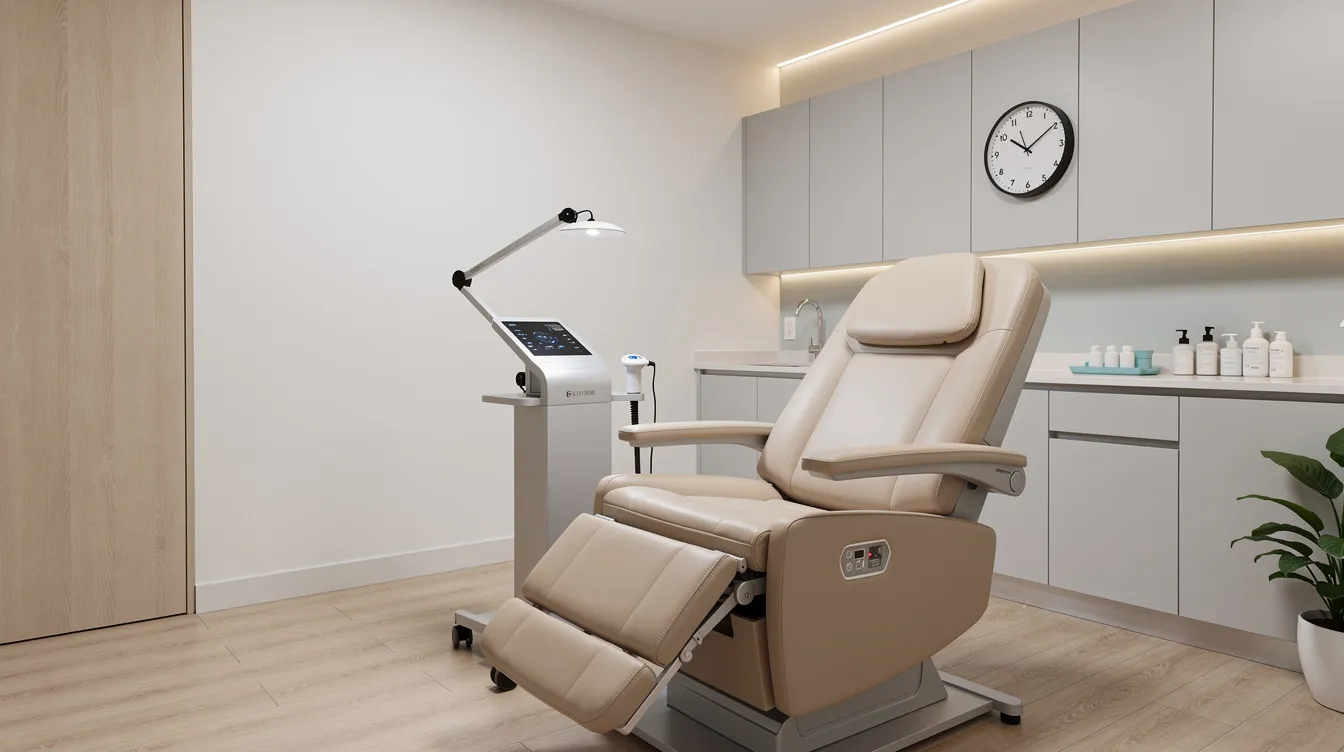
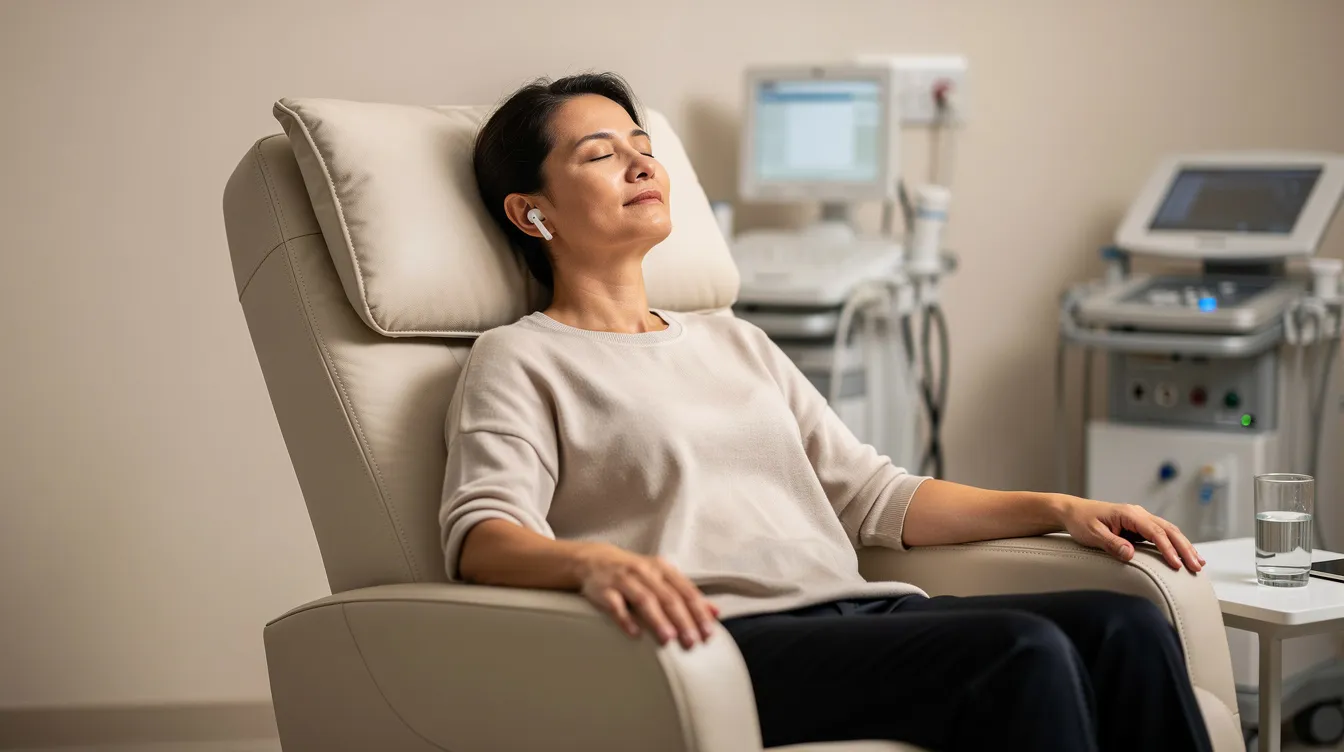
During each session, the patient sits in a comfortable reclining chair, wears earplugs to protect against the clicking sounds of the magnetic coil, and feels a tapping sensation on the scalp. Patients can relax, listen to music, or chat with staff between pulse trains. No sedation is used. A session lasts roughly 20 to 40 minutes depending on the protocol.
Most patients begin to notice mood and energy improvements between weeks 2 and 4, though some are earlier or later responders. Trained TMS technicians and psychiatric providers at Revitalizing Remedies supervise each course and adjust settings for comfort and efficacy.
Benefits of TMS Compared With Other Depression Treatments
TMS is typically considered after at least two traditional antidepressants have not worked or have caused intolerable side effects, making it a critical tool in the depression treatment arsenal.
TMS vs. antidepressant medication: TMS avoids widespread chemical changes and systemic side effects associated with medication. Because brain stimulation is localized, patients do not experience weight gain, sexual dysfunction, gastrointestinal upset, or the drug interactions that many Hackettstown-area patients struggle with on pills.
TMS vs. electroconvulsive therapy (ECT): Unlike ECT, TMS does not require anesthesia or induce seizures. It carries no known risk of the memory loss often associated with ECT and allows patients to drive themselves to and from the clinic. TMS is better tolerated than ECT and antidepressant medications. ECT can still be lifesaving for very severe or psychotic major depression, but it is a far more intensive procedure that does require surgery-level preparation and general anesthesia.
TMS vs. other treatments: Compared with antipsychotic augmentation (which may cause sedation, metabolic changes, and movement disorders), TMS targets the brain more directly with a milder side-effect profile. Other brain stimulation therapies like vagus nerve stimulation and deep brain stimulation are generally reserved for even more refractory cases and require surgery or implantation, unlike TMS.
At Revitalizing Remedies, TMS fits alongside other advanced options including SPRAVATO® nasal spray, diagnostic blood work and metabolic testing, and micronutrient IV therapy to address underlying deficiencies. Many patients report improved ability to work, socialize, and enjoy daily activities after years of feeling stuck.
Risks, Side Effects, and Safety of TMS Therapy
TMS is generally well-tolerated and considered safe when delivered by trained professionals following established guidelines, including the protocols used at Revitalizing Remedies in Hackettstown.
Common side effects include:
- Mild to moderate scalp discomfort at the treatment site
- Headaches during or after sessions
- Facial muscle twitching during pulses
- Temporary fatigue
TMS side effects are typically mild and temporary, usually improving over the first one to two weeks as patients acclimate. Over-the-counter pain relievers and slight adjustments in stimulation intensity or tms coil positioning can significantly reduce discomfort for most patients.
Hearing loss can occur due to the loud sounds produced during TMS, which is why earplugs are provided at every session.
Rare but serious risks: TMS has a seizure risk of about 0.1% in large datasets. This risk is minimized through careful screening for seizure history, head injury, brain lesions, or medications that lower seizure threshold. Patients with a history of seizures may require careful evaluation before starting treatment.
Relative contraindications include:
- Non-removable magnetically sensitive metal in or near the head (certain aneurysm clips, deep brain stimulators, older cochlear implants, or shrapnel)
- Unstable medical conditions
- Implanted devices affected by magnetic fields
TMS is not safe for individuals with certain metal implants near the brain. Cognitive side effects like memory loss, confusion, or personality changes are not characteristic of rTMS, which is a primary reason many patients prefer it over ECT or repeated medication switches.
Revitalizing Remedies performs a detailed medical and psychiatric intake, and coordinates with primary care or neurology when needed, before clearing anyone for tms therapy.
Who Is (and Is Not) a Good Candidate for TMS?
Not everyone with depression needs TMS. It is designed as an effective treatment for adults with moderate to severe major depressive disorder who have not responded to standard approaches. TMS is FDA-approved for adults aged 18 and older. TMS is suitable for adults with treatment-resistant depression, and candidates must have tried two or more antidepressants without success.
Who may especially benefit:
- Patients whose depression keeps them from working or caring for family despite trying medication
- People who cannot tolerate antidepressant side effects
- Individuals seeking a noninvasive, device-based option that does not require anesthesia
Who may need extra caution or alternative treatments:
- People with metal or electronics in the head (certain implants, cochlear implants, shrapnel)
- Those with a history of seizure disorder or certain neurological diseases
- Patients with unstable substance use or psychotic depression (which may respond better to ECT)
- Individuals with bipolar disorder, who need careful evaluation to avoid triggering mania
Patients with co-occurring anxiety disorders, PTSD, or obsessive compulsive disorder can sometimes still receive TMS if depression is the primary target. In some cases, deep tms protocols or combined treatments may be discussed.
At Revitalizing Remedies, the team determines fit for TMS versus SPRAVATO® or other treatments through personalized assessment, review of past records, discussion of preferences, and insurance pre-authorization, all done locally for Hackettstown residents and patients across Morris, Sussex, and Warren Counties.
How TMS Fits into Comprehensive Depression Treatment at Revitalizing Remedies
No single depression treatment works for everyone. The best outcomes often come from combining evidence-based approaches tailored to each person's biology, psychology, and life circumstances.
Revitalizing Remedies offers an integrated model of care in Hackettstown:
- Psychiatry and medication management
- TMS treatment
- SPRAVATO® (esketamine) therapy
- Diagnostic testing including blood work, genetic, and metabolic assessments
- Micronutrient IV therapy
- Traditional psychotherapy
TMS can be combined with existing antidepressant medication and therapy rather than replacing them. In many cases, patients stay on stable doses during their TMS course and later discuss gradual adjustments based on their response.
Some Hackettstown-area patients who do not respond sufficiently to TMS may be candidates for SPRAVATO® or other treatments, and vice versa. The clinic helps sequence or combine these options as safely as possible, drawing on its expertise in TMS as a new hope for treatment-resistant depression.
After a TMS course, ongoing support matters: continued counseling, lifestyle recommendations around sleep, exercise, and nutrition, and periodic follow-ups to catch any return of symptoms early. Revitalizing Remedies accepts most insurance companies, including Medicare and Medicaid, and works with patients from Hackettstown, neighboring communities in Warren, Morris, and Sussex Counties, and other northern New Jersey towns to verify coverage.

Practical Details: Sessions, Results Timeline, and Insurance in Hackettstown, NJ
Most people receive TMS five days a week, usually Monday through Friday, at a consistent time to fit with work or family schedules.
Visit logistics:
- Initial mapping session: 45–60 minutes
- Follow-up sessions: each session lasts approximately 20 to 30 minutes (less with rapid protocols)
- Patients spend the rest of the day as normal
Realistic expectations for symptom relief:
Some patients feel a boost in energy or improved sleep within the first one to two weeks, while others do not notice significant depressive symptoms improvement until weeks 3 through 5. Full benefit is usually assessed at the end of the acute series. Results can last months to over a year. If symptoms gradually return, many insurers allow a second TMS course or maintenance TMS sessions may be recommended to prevent relapse after initial treatment.
Insurance and cost:
Many commercial insurers, as well as Medicare and Medicaid in New Jersey, cover rTMS for treatment resistant depression when medical necessity criteria are met. In NJ, plans like Wellpoint Medicaid require prior authorization, documentation of failed medication trials, and specification of the protocol. The staff at Revitalizing Remedies helps patients in Hackettstown and surrounding areas navigate pre-authorizations, co-pays, and documentation requirements before treatment begins.
For those without coverage, Revitalizing Remedies can discuss self-pay rates and payment arrangements with full transparency about costs as part of its broader commitment to empowering mental health solutions and comprehensive treatment in NJ.
Frequently Asked Questions About TMS for Resistant Depression
Below are answers to the practical, day-to-day questions that most often come up from patients in Hackettstown and nearby New Jersey communities considering tms for treatment resistant depression, along with insights that reflect the experiences shared in patient testimonials from Revitalizing Remedies.
Will I feel like "myself" during and after TMS therapy?
TMS does not change personality or intelligence. It aims to reduce depressive symptoms like low mood, hopelessness, and poor concentration so you can feel more like your usual self again. Most patients at Revitalizing Remedies describe feeling clearer, lighter, and more engaged with life as their course progresses, not numb or artificially happy. Providers monitor for any unusual reactions and can adjust treatment or coordinate medication changes if needed.
Can I keep working or going to school during rTMS treatment?
Because tms works without sedation and has no required recovery time, most people continue their regular jobs, classes, or caregiving while receiving daily sessions. TMS is a noninvasive procedure that does not require anesthesia, and patients can return to normal activities immediately. Early-morning, lunchtime, or late-afternoon appointments at Revitalizing Remedies help minimize disruption to work or family responsibilities.
How is TMS different from SPRAVATO® (esketamine) and ketamine treatment?
SPRAVATO® is an FDA-approved nasal spray form of esketamine used for treatment-resistant depression administered in a certified clinic. TMS modulates brain circuits externally through magnetic pulses, while esketamine and ketamine act chemically on NMDA receptors and glutamate pathways inside the brain. TMS does not cause dissociation or acute changes in perception, whereas SPRAVATO® sessions include a monitored observation period due to transient mind-altering effects. The team at Revitalizing Remedies helps each patient decide whether TMS, SPRAVATO® and esketamine-based depression treatment, or a combination fits best with their medical history, preferences, and insurance coverage.
Is TMS covered by Medicare or Medicaid in New Jersey?
As of 2026, Medicare and many Medicaid plans in New Jersey, along with most insurance companies, generally cover rTMS for treatment resistant depression when specific criteria are met, such as documented failure of at least two antidepressant medications and a confirmed diagnosis of major depressive disorder. Coverage details vary by plan, including the number of sessions authorized and documentation requirements. Patients in Hackettstown, Morris County, Sussex County, and surrounding areas should contact Revitalizing Remedies so staff can verify benefits, submit pre-authorization, and review expected out-of-pocket costs before starting.
What should I do if TMS doesn't help enough?
A partial or limited response to TMS does not mean you are out of options. Depression treatment is often a stepwise process. Next-step possibilities at Revitalizing Remedies include adjusting or extending TMS protocols, adding or switching antidepressant medication, exploring SPRAVATO® or ketamine-based therapies, intensifying psychotherapy, or addressing medical contributors like thyroid issues or nutrient deficiencies through diagnostic testing. Ongoing communication with your treatment team ensures decisions are data-driven and aligned with your goals.
Next Steps: Getting Help for Stubborn Depression in Hackettstown, NJ
Living with resistant depression is exhausting, especially after years of cycling through medications that never quite work. But treatment resistant depression does not mean untreatable depression. Effective options exist, and they are available right here in Hackettstown.
What to remember about TMS:
- It is an FDA-cleared noninvasive form of brain stimulation that has been available since TMS was first FDA-cleared for use in 2008
- It achieves meaningful symptom relief in roughly 50% to 60% of patients with treatment resistant depression and full remission in about 37%
- It fits within a broader mental health treatment plan alongside therapy, medication, and other advanced interventions, similar to other regional centers that provide mental health and TMS care in northern New Jersey
Adults living in Hackettstown, as well as nearby communities in Warren, Morris, and Sussex Counties such as Washington, Long Valley, Mount Olive, and Newton, are welcome to contact Revitalizing Remedies for a TMS consultation.
Here is what happens after you reach out:
- An initial phone screening and insurance verification
- A comprehensive psychiatric evaluation
- A personalized discussion of TMS, SPRAVATO®, and other depression treatments available at the clinic
Do not wait for symptoms to worsen. Call the Hackettstown office, request an appointment online, or complete the new patient forms to get started on tms therapy today.
Many people who once felt hopeless about their depression have found meaningful relief and renewed functioning through TMS and integrated care at Revitalizing Remedies, supported by educational tools like their mental health video library. Your next chapter does not have to look like the last one.